Platform comparison
| Platform | YES odds | NO odds | Fee | KYC | Settlement | |
|---|---|---|---|---|---|---|
Polymarket (via BTC Prediction) Pick polygram.ink (preferred broker) |
31% | 69% | 0% (USDC on-chain) | No-KYC up to $1,500 | USDC, auto via UMA oracle | Open live market → |
Polymarket (direct) polymarket.com |
31% | 69% | 0% | Geo-blocked in US/UK/EU | USDC, on-chain | Open live market → |
Kalshi kalshi.com |
— | — | Up to 7% per trade | US-only, KYC required | USD | Open live market → |
Betfair Exchange betfair.com |
— | — | 2-5% commission | Full KYC from first trade | GBP / EUR | Open live market → |
Manifold Markets manifold.markets |
— | — | Play-money (mana) | None — play-money | Mana (no cash-out) | Open live market → |
Outcome probabilities
Current market-implied probability for each outcome, from the live order book.
| Outcome | Probability |
|---|---|
| United States | 31% |
| United Kingdom | 4% |
| France | 4% |
| Italy | 2% |
| Germany | 2% |
| Netherlands | 1% |
| Greece | 1% |
| Australia | 1% |
Market context
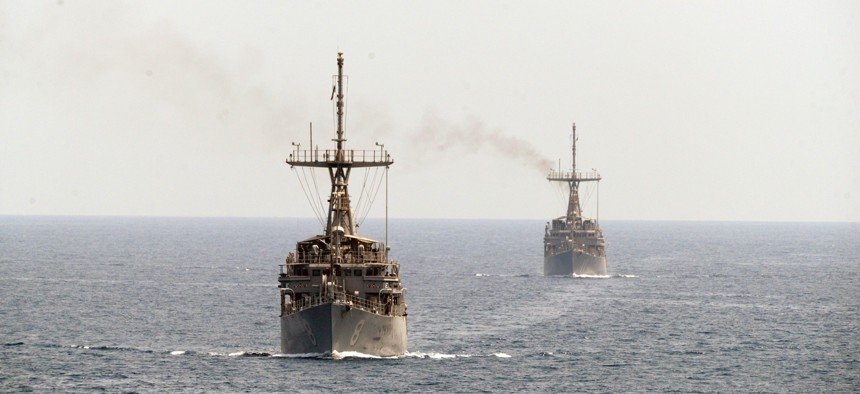
The Strait of Hormuz, a 54-kilometre chokepoint between Iran and Oman, handles roughly one-third of global seaborne oil trade. Warship transits through the waterway remain politically sensitive; Iran has repeatedly threatened to close or restrict passage, whilst the United States and allied navies periodically conduct freedom-of-navigation operations to assert international law. The question of whether additional nations will deploy military vessels through the strait by end-July 2026 hinges on regional escalation dynamics and the willingness of non-traditional actors to assert naval presence in contested waters.
Historical precedent suggests transits cluster around geopolitical flashpoints. The 2019 tanker attacks and subsequent US carrier deployments saw multiple allied navies increase Hormuz presence; conversely, periods of diplomatic engagement have seen reduced military traffic. Current 4% implied probability reflects baseline expectations of stability—a figure consistent with markets pricing low near-term escalation. However, any Israeli-Iran military exchange, Houthi attacks on shipping, or formal US sanctions escalation could rapidly alter calculus for nations weighing strategic positioning.
Traders should monitor Iranian rhetoric around nuclear negotiations, scheduled UN Security Council votes on sanctions, and US naval deployment announcements. Recent reports from Reuters and regional defence ministries indicate no imminent surge in allied naval operations, though contingency planning remains active. Funding dynamics on crypto prediction markets typically tighten around geopolitical news drops; watch for whale accumulation of YES positions if conflict indicators spike, as such moves often precede broader market repricing.
Methodology
Methodologically this overview focuses on on-chain pricing: Polymarket's live mid comes from the Polygon conditional-token order book and settles automatically in USDC. The other three venues — Kalshi, Betfair, Manifold — sit alongside as off-chain reference points so you can see how the contract translates across regulatory and settlement regimes.
Resolution & payout
Settlement is on-chain via UMA Optimistic Oracle. A proposer posts the outcome with a bond, a two-hour dispute window opens, then the smart contract lifts winning conditional tokens to 1 USDC and sends payments to holders' wallets automatically. No withdrawal fees beyond Polygon gas.
Off-chain venues (Kalshi, Betfair, Smarkets) settle in local fiat through bank-side clearing — faster than SWIFT, slower than on-chain. Manifold pays no real cash.
FAQ
- What are crypto prediction markets?
- Crypto prediction markets are on-chain smart contracts where you buy YES or NO shares on a future crypto event (e.g. "BTC above $100k by year-end"). The market price between 0¢ and 100¢ is the implied probability.
- What does a transaction cost on Polygon?
- Polygon gas is typically under $0.01 per transaction. A full trade cycle (Approve + Order + Fill) totals around $0.03 — compared to $5-50 on Ethereum mainnet.
- How does UMA secure the resolution?
- The UMA Optimistic Oracle uses a bond system: a proposer posts a bond, a two-hour challenge window opens. On dispute the losing side forfeits the bond — financial incentive for honest resolution.
- How volatile are crypto prediction markets?
- Crypto markets react to spot prices — a 5% BTC move typically shifts a "BTC above X by date" market 10-20%. Polymarket crypto market liquidity is usually six-figure USD, sufficient for active trading.
- Which crypto markets exist on Polymarket?
- Currently active markets include BTC/ETH/SOL price targets, halving dates, ETF approvals, hard-fork outcomes and Layer-2 TVL thresholds. The list updates weekly; biggest volume sits on BTC and ETH price forecasts.
%22%2F%3E%3Cpath%20d%3D%22M%206%2066%20A%2026%2026%200%200%201%2058%2066%22%20fill%3D%22%23E6B98D%22%20opacity%3D%220.9%22%2F%3E%3Ccircle%20cx%3D%2232%22%20cy%3D%2226%22%20r%3D%2222%22%20fill%3D%22%23F5CBA7%22%2F%3E%3Cpath%20d%3D%22M%2010%2026%20A%2022%2028%200%200%201%2054%2026%22%20fill%3D%22%23fbbf24%22%20opacity%3D%220.9%22%2F%3E%3C%2Fsvg%3E) and
and%22%2F%3E%3Cpath%20d%3D%22M%206%2066%20A%2026%2026%200%200%201%2058%2066%22%20fill%3D%22%23E6B98D%22%20opacity%3D%220.9%22%2F%3E%3Ccircle%20cx%3D%2232%22%20cy%3D%2226%22%20r%3D%2222%22%20fill%3D%22%23F5CBA7%22%2F%3E%3Cpath%20d%3D%22M%2010%2018%20Q%2016%204%2026%2010%20Q%2020%202%2032%206%20Q%2044%202%2038%2010%20Q%2048%204%2054%2018%22%20stroke%3D%22%23fbbf24%22%20stroke-width%3D%224%22%20fill%3D%22none%22%20stroke-linecap%3D%22round%22%2F%3E%3C%2Fsvg%3E)
Trade Which countries will send warships through the Strai… on BTC Prediction
Live order book, 0% fees, USDC settlement in seconds.
Open live market →