Platform comparison
| Platform | YES odds | NO odds | Fee | KYC | Settlement | |
|---|---|---|---|---|---|---|
Polymarket (via BTC Prediction) Pick polygram.ink (preferred broker) |
61% | 39% | 0% (USDC on-chain) | No-KYC up to $1,500 | USDC, auto via UMA oracle | Open live market → |
Polymarket (direct) polymarket.com |
61% | 39% | 0% | Geo-blocked in US/UK/EU | USDC, on-chain | Open live market → |
Kalshi kalshi.com |
— | — | Up to 7% per trade | US-only, KYC required | USD | Open live market → |
Betfair Exchange betfair.com |
— | — | 2-5% commission | Full KYC from first trade | GBP / EUR | Open live market → |
Manifold Markets manifold.markets |
— | — | Play-money (mana) | None — play-money | Mana (no cash-out) | Open live market → |
Outcome probabilities
Current market-implied probability for each outcome, from the live order book.
| Outcome | Probability |
|---|---|
| 32°C | 61% |
| 33°C | 32% |
| 34°C | 1% |
| 27°C or below | 0% |
| 28°C | 0% |
| 29°C | 0% |
| 30°C | 0% |
| 31°C | 0% |
| 35°C | 0% |
| 36°C | 0% |
| 37°C or higher | 0% |
Market context
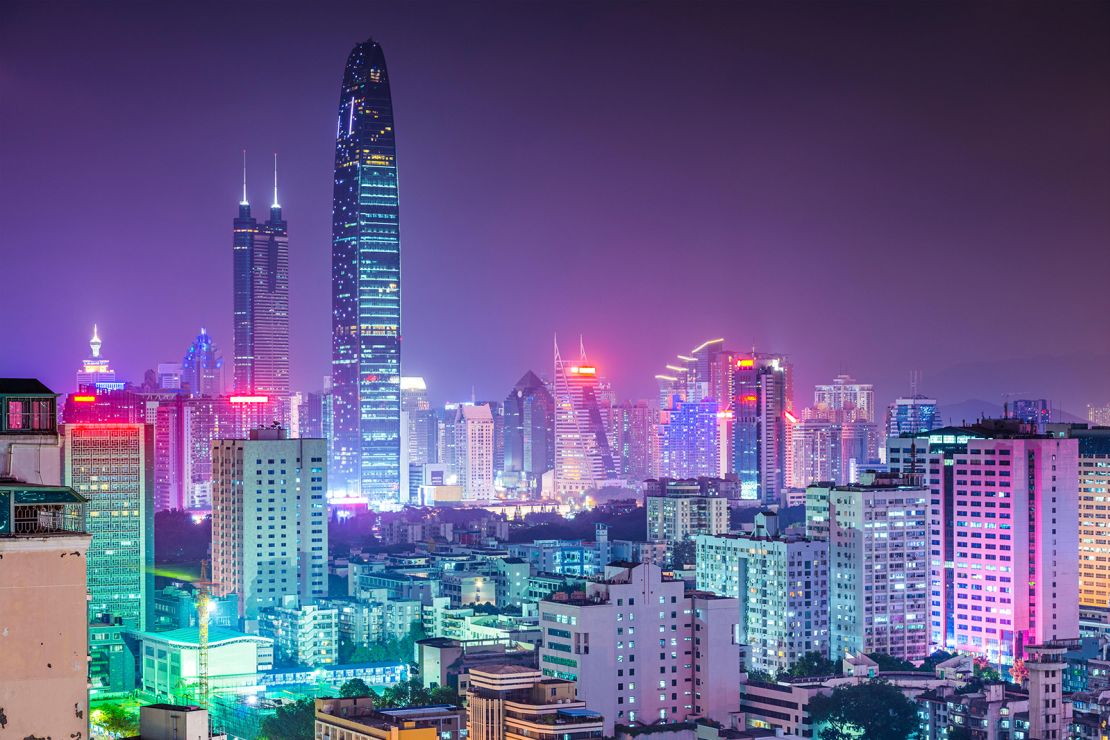
Shenzhen’s highest temperature on 5 August will be set by the Shenzhen Bao'an International Airport Station reading that Wunderground records for the full day, so the market is really about the day’s peak station temperature rather than a city-wide average. August is normally one of Shenzhen’s hottest and stickiest months, with typical daytime highs around 31–32°C and frequent rain, which makes the upper end of the distribution more important than the mean. Forecasts for early August 2026 cluster around the low 30s Celsius, while longer-run climate references put Shenzhen’s August daily highs around 89–91°F, or roughly 32–33°C.[1][2][5][15]
That background helps explain why a 0% YES price can still be rational if the strike bands are set above the likely realised peak or if traders expect a below-threshold reading at the airport station. Comparable August climate data for Shenzhen shows highs usually topping out in the low 30s Celsius, with rare excursions into the mid-30s rather than extreme heat, so the contract should be read as a threshold bet on whether the station’s maximum lands in the relevant band, not simply whether the city feels hot.[4][11][15][19] In practice, the relevant comparison is against the airport’s official observation rather than any app forecast for central Shenzhen.[10][14]
For catalysts, watch the morning-to-afternoon evolution of convection, rain bands, and any typhoon-related disruption, because cloud cover and precipitation can cap the day’s maximum even in midsummer. August is also peak typhoon season in southern China, and several forecast services flag persistent rain risk and high humidity for Shenzhen in this period.[2][19][20] On-chain, the main market microstructure factor is whether traders treat the contract as a near-dated USDC settle and whether broader BTC/ETH risk appetite is stable enough to keep speculative flows active; if crypto funding rates or spot volatility spike, discretionary weather-market positioning can thin out even when the meteorological setup is clear.
Methodology
This page reads Highest temperature in Shenzhen on August 5? on-chain. Polymarket's quote comes directly from the Polygon order book — the only comparable venue with on-chain settlement. Kalshi (USD, off-chain), Betfair (GBP/EUR, off-chain) and Manifold (play-money) are listed alongside for venue context. Every CTA routes to BTC Prediction, which mirrors the Polymarket order book directly.
Resolution & payout
Settlement is on-chain via UMA Optimistic Oracle. A proposer posts the outcome with a bond, a two-hour dispute window opens, then the smart contract lifts winning conditional tokens to 1 USDC and sends payments to holders' wallets automatically. No withdrawal fees beyond Polygon gas.
Off-chain venues (Kalshi, Betfair, Smarkets) settle in local fiat through bank-side clearing — faster than SWIFT, slower than on-chain. Manifold pays no real cash.
FAQ
- Why USDC and not ETH or USDT?
- USDC is the Polygon standard — audited reserves (Circle, monthly attestation), deepest order book, low gas costs. ETH volatility would distort probability quotes; USDT has thinner Polygon liquidity than USDC.
- Can I use Bitcoin directly?
- No, Polymarket operates exclusively in USDC on Polygon. You can bridge BTC to USDC via an exchange or bridge service and deposit on Polygon — typically 10-30 minutes processing time.
- How volatile are crypto prediction markets?
- Crypto markets react to spot prices — a 5% BTC move typically shifts a "BTC above X by date" market 10-20%. Polymarket crypto market liquidity is usually six-figure USD, sufficient for active trading.
- Which crypto markets exist on Polymarket?
- Currently active markets include BTC/ETH/SOL price targets, halving dates, ETF approvals, hard-fork outcomes and Layer-2 TVL thresholds. The list updates weekly; biggest volume sits on BTC and ETH price forecasts.
- Are crypto prediction markets taxable in the US?
- In the US, prediction market gains are typically treated as ordinary income or short-term capital gains depending on holding period. Consult a tax professional for your specific situation — we cannot provide tax advice.
%22%2F%3E%3Cpath%20d%3D%22M%206%2066%20A%2026%2026%200%200%201%2058%2066%22%20fill%3D%22%23E6B98D%22%20opacity%3D%220.9%22%2F%3E%3Ccircle%20cx%3D%2232%22%20cy%3D%2226%22%20r%3D%2222%22%20fill%3D%22%23F5CBA7%22%2F%3E%3Cpath%20d%3D%22M%2010%2026%20A%2022%2028%200%200%201%2054%2026%22%20fill%3D%22%23fbbf24%22%20opacity%3D%220.9%22%2F%3E%3C%2Fsvg%3E) and
and%22%2F%3E%3Cpath%20d%3D%22M%206%2066%20A%2026%2026%200%200%201%2058%2066%22%20fill%3D%22%23E6B98D%22%20opacity%3D%220.9%22%2F%3E%3Ccircle%20cx%3D%2232%22%20cy%3D%2226%22%20r%3D%2222%22%20fill%3D%22%23F5CBA7%22%2F%3E%3Cpath%20d%3D%22M%2010%2018%20Q%2016%204%2026%2010%20Q%2020%202%2032%206%20Q%2044%202%2038%2010%20Q%2048%204%2054%2018%22%20stroke%3D%22%23fbbf24%22%20stroke-width%3D%224%22%20fill%3D%22none%22%20stroke-linecap%3D%22round%22%2F%3E%3C%2Fsvg%3E)
Trade Highest temperature in Shenzhen on August 5? on BTC Prediction
Live order book, 0% fees, USDC settlement in seconds.
Open live market →