Market statistics
- Total volume
- $1.6M
- 24h volume
- $776K
- Liquidity
- $6K
- Open interest
- $23K
- Comments
- 119
Platform comparison
| Platform | YES odds | NO odds | Fee | KYC | Settlement | |
|---|---|---|---|---|---|---|
Polymarket (via PolyGram) Pick polygram.ink (preferred broker) |
0% | 100% | 0% (USDC on-chain) | No-KYC up to $1,500 | USDC, auto via UMA oracle | Open live market → |
Polymarket (direct) polymarket.com |
0% | 100% | 0% | Geo-blocked in US/UK/EU | USDC, on-chain | Open live market → |
Kalshi kalshi.com |
— | — | Up to 7% per trade | US-only, KYC required | USD | Open live market → |
Betfair Exchange betfair.com |
— | — | 2-5% commission | Full KYC from first trade | GBP / EUR | Open live market → |
Manifold Markets manifold.markets |
— | — | Play-money (mana) | None — play-money | Mana (no cash-out) | Open live market → |
Available prediction outcomes (7)
Sorted by descending live probability. Click any outcome to trade it on PolyGram.
Market context
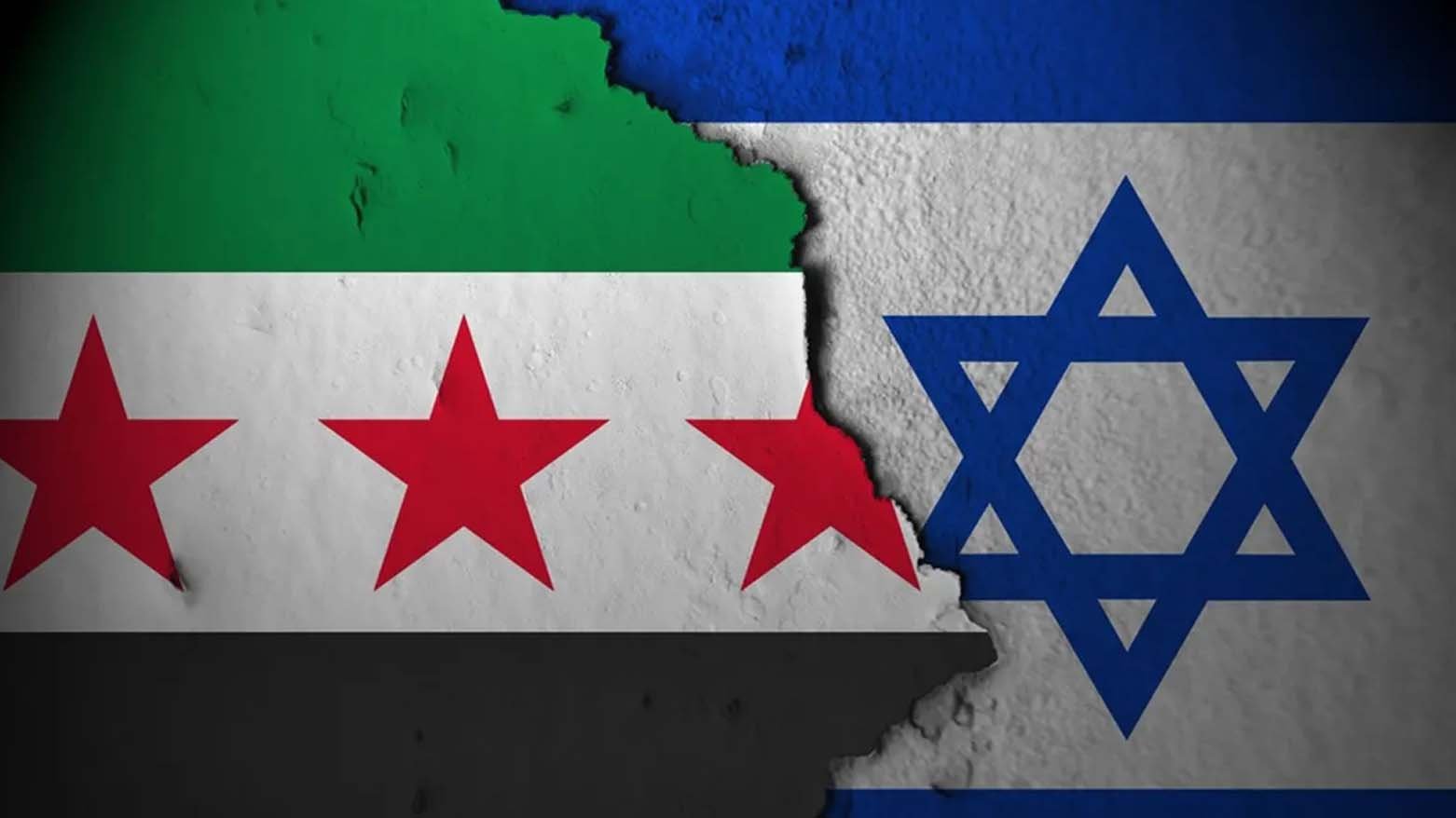
Israel and Syria have no formal diplomatic relations and remain technically at war. The two countries share a contested border in the Golan Heights, which Israel has occupied since 1967 and annexed in 1981—a status Syria and most of the international community do not recognise. Recent military incidents, including July 2024 skirmishes, underscore persistent tensions. A binding security agreement would require mutual governmental recognition, demarcation protocols, and formalised frameworks addressing border control and military operations—substantially more demanding than temporary ceasefires or de-escalation announcements.
Historical precedent suggests such agreements emerge only after major geopolitical shifts. Israel's 1979 Egypt peace treaty and 1994 Jordan accord followed military defeats or regional realignments that shifted both parties' strategic calculus. Syria's current position—weakened by civil war, dependent on Russian and Iranian support, and facing Israeli military superiority—offers limited incentive for formalised security architecture. The Assad government has historically rejected normalisation without Israeli withdrawal from the Golan, a position unchanged despite Syria's reduced leverage. No credible diplomatic track exists as of early 2025.
Traders should monitor statements from Israeli, Syrian, Russian and US officials regarding Golan status or border negotiations. UN mediation efforts or multilateral frameworks involving Gulf states could signal shifting dynamics, though none are currently active. The nine-month window to September 2025 represents a compressed timeframe for negotiations requiring domestic political consensus in both capitals. The 0% crowd probability reflects the absence of active diplomatic channels and structural incompatibility of stated positions.
Wikipedia Context
-
 Borders of Israel
The modern borders of Israel exist as the result both of past wars and of diplomatic agreements between the State of Israel and its neighbours, as well as an effect of the agreements among colonial powers ruling in the region before Israel's creation. Only two of Israel's five total potential land borders are internationally recognized and uncontested, while
-
 Israel–Syria relations
Israel–Syria relations refer to the bilateral ties between the State of Israel and the Syrian Arab Republic. The two countries have been locked in a perpetual war since the establishment of Israel in 1948, with their most significant and direct armed engagements being in the First Arab–Israeli War in 1948–1949, the Third Arab–Israeli War in 1967, and the Fou
-
 United Nations Disengagement Observer Force
The United Nations Disengagement Observer Force (UNDOF) is a United Nations peacekeeping mission tasked with maintaining the ceasefire between Israel and Syria in the aftermath of the 1973 Yom Kippur War. The mission was established by United Nations Security Council Resolution 350 on 31 May 1974, to implement Resolution 338 (1973) which called for an immedi
-
 Israel–Syria Mixed Armistice Commission
The Israel–Syria Mixed Armistice Commission (ISMAC) was the United Nations commission for observing the armistice between Israel and Syria after the 1948 Arab–Israeli War, as part of the Mixed Armistice Commissions (MAC). The fourth and last truce agreement, the 1949 armistice agreement, was signed between Israel and Syria on 20 July 1949 on Hill 232 near Ma
Methodology
This page reads Israel x Syria security agreement by 2025? on-chain. Polymarket's quote comes directly from the Polygon order book — the only comparable venue with on-chain settlement. Kalshi (USD, off-chain), Betfair (GBP/EUR, off-chain) and Manifold (play-money) are listed alongside for venue context. Every CTA routes to PolyGram, which mirrors the Polymarket order book directly.
Resolution & payout
Settlement is on-chain via UMA Optimistic Oracle. A proposer posts the outcome with a bond, a two-hour dispute window opens, then the smart contract lifts winning conditional tokens to 1 USDC and sends payments to holders' wallets automatically. No withdrawal fees beyond Polygon gas.
Off-chain venues (Kalshi, Betfair, Smarkets) settle in local fiat through bank-side clearing — faster than SWIFT, slower than on-chain. Manifold pays no real cash.
FAQ
- What are crypto prediction markets?
- Crypto prediction markets are on-chain smart contracts where you buy YES or NO shares on a future crypto event (e.g. "BTC above $100k by year-end"). The market price between 0¢ and 100¢ is the implied probability.
- What does a transaction cost on Polygon?
- Polygon gas is typically under $0.01 per transaction. A full trade cycle (Approve + Order + Fill) totals around $0.03 — compared to $5-50 on Ethereum mainnet.
- Can I use Bitcoin directly?
- No, Polymarket operates exclusively in USDC on Polygon. You can bridge BTC to USDC via an exchange or bridge service and deposit on Polygon — typically 10-30 minutes processing time.
- How does UMA secure the resolution?
- The UMA Optimistic Oracle uses a bond system: a proposer posts a bond, a two-hour challenge window opens. On dispute the losing side forfeits the bond — financial incentive for honest resolution.
- Which crypto markets exist on Polymarket?
- Currently active markets include BTC/ETH/SOL price targets, halving dates, ETF approvals, hard-fork outcomes and Layer-2 TVL thresholds. The list updates weekly; biggest volume sits on BTC and ETH price forecasts.
Trade Israel x Syria security agreement by 2025? on PolyGram
Live order book, 0% fees, USDC settlement in seconds.
Open live market →