Platform comparison
| Platform | YES odds | NO odds | Fee | KYC | Settlement | |
|---|---|---|---|---|---|---|
Polymarket (via BTC Prediction) Pick polygram.ink (preferred broker) |
32% | 68% | 0% (USDC on-chain) | No-KYC up to $1,500 | USDC, auto via UMA oracle | Open live market → |
Polymarket (direct) polymarket.com |
32% | 68% | 0% | Geo-blocked in US/UK/EU | USDC, on-chain | Open live market → |
Kalshi kalshi.com |
— | — | Up to 7% per trade | US-only, KYC required | USD | Open live market → |
Betfair Exchange betfair.com |
— | — | 2-5% commission | Full KYC from first trade | GBP / EUR | Open live market → |
Manifold Markets manifold.markets |
— | — | Play-money (mana) | None — play-money | Mana (no cash-out) | Open live market → |
Outcome probabilities
Current market-implied probability for each outcome, from the live order book.
| Outcome | Probability |
|---|---|
| December 31 | 32% |
| July 31 | 16% |
| June 30 | 1% |
Market context
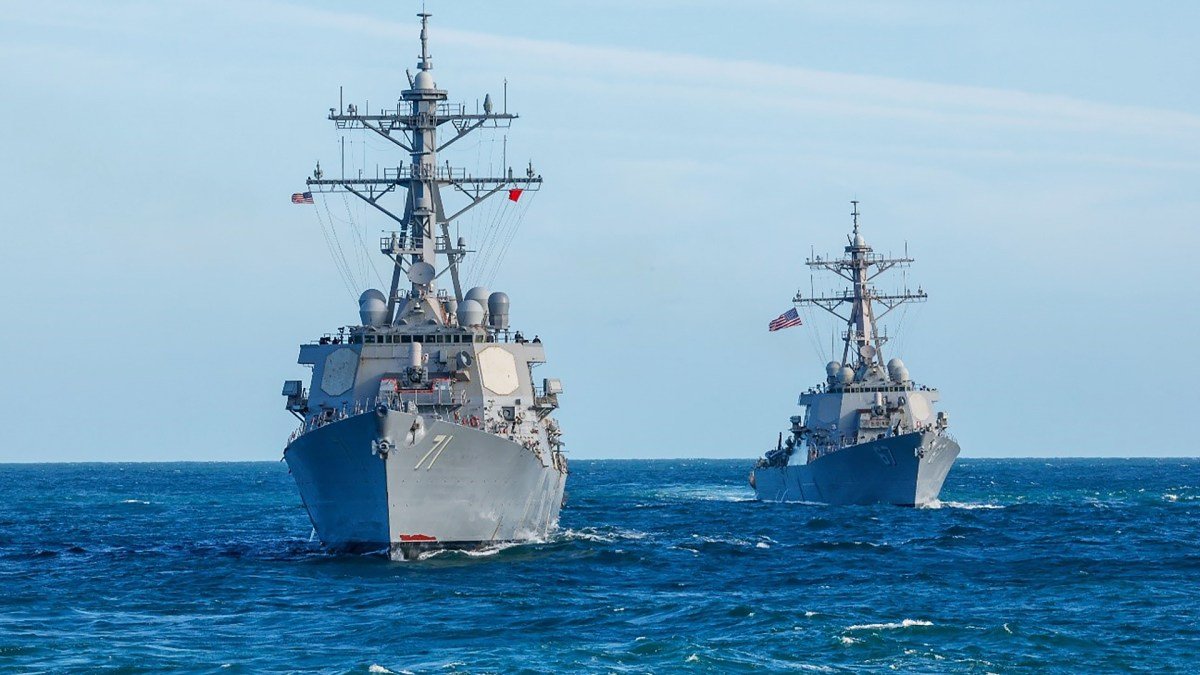
The United States has already imposed a naval blockade on Iran, which commenced on 13 April 2026 following the collapse of the Islamabad Talks, and was fully implemented by CENTCOM within 36 hours to suspend all sea trade to and from Iranian ports[1][2]. This is not a hypothetical future event but a current military reality that has already redirected at least 29 vessels and seized one, effectively halting Iran’s crude exports to China[3]. The market’s 32% “Yes” probability appears to misread the contract’s condition, which resolves to “Yes” if the US *announces* the blockade between market creation and the settlement date; since the announcement occurred in April 2026, the event has already transpired, making the “No” outcome the logical resolution unless the contract window is interpreted to include past announcements.
Historically, US naval blockades have been temporary escalations tied to specific diplomatic failures, as seen when the 2026 blockade was lifted on 18 June after Trump and Iran reached a ceasefire agreement to reopen the Strait of Hormuz[2]. Comparable cases, such as the 1980s blockade of Nicaragua or the 1990s sanctions on Iraq, show that such measures are often reversed once negotiations resume, suggesting the current probability may reflect uncertainty about whether the April announcement qualifies under the contract’s temporal window rather than doubt about the blockade’s existence. Traders should watch CENTCOM’s official statements for any re-announcement or expansion of the blockade, particularly General Dan Caine’s recent assertion that US forces will pursue Iranian-linked vessels globally, which could trigger a new “announcement” event if formally declared[5].
For crypto traders, this market’s resolution hinges on on-chain mechanics tied to USDC settlement and BTC/ETH macro volatility, as geopolitical shocks often drive funding rates and whale flows in crypto derivatives. If the contract resolves to “No” due to the past announcement, USDC liquidity may shift to higher-yield DeFi protocols, while BTC could see a short-term dip if traders re-price geopolitical risk. Monitor Marine Traffic data for vessel redirections and CENTCOM press releases for any new blockade declarations, as these are the primary catalysts for a “Yes” resolution[7]. The settlement window ending 31 December 2026 allows time for potential re-announcements, but the April 2026 event remains the definitive precedent.
Methodology
This page reads US announces blockade on Iran by 2026? on-chain. Polymarket's quote comes directly from the Polygon order book — the only comparable venue with on-chain settlement. Kalshi (USD, off-chain), Betfair (GBP/EUR, off-chain) and Manifold (play-money) are listed alongside for venue context. Every CTA routes to BTC Prediction, which mirrors the Polymarket order book directly.
Resolution & payout
Settlement is on-chain via UMA Optimistic Oracle. A proposer posts the outcome with a bond, a two-hour dispute window opens, then the smart contract lifts winning conditional tokens to 1 USDC and sends payments to holders' wallets automatically. No withdrawal fees beyond Polygon gas.
Off-chain venues (Kalshi, Betfair, Smarkets) settle in local fiat through bank-side clearing — faster than SWIFT, slower than on-chain. Manifold pays no real cash.
FAQ
- What are crypto prediction markets?
- Crypto prediction markets are on-chain smart contracts where you buy YES or NO shares on a future crypto event (e.g. "BTC above $100k by year-end"). The market price between 0¢ and 100¢ is the implied probability.
- What does a transaction cost on Polygon?
- Polygon gas is typically under $0.01 per transaction. A full trade cycle (Approve + Order + Fill) totals around $0.03 — compared to $5-50 on Ethereum mainnet.
- Can I use Bitcoin directly?
- No, Polymarket operates exclusively in USDC on Polygon. You can bridge BTC to USDC via an exchange or bridge service and deposit on Polygon — typically 10-30 minutes processing time.
- How does UMA secure the resolution?
- The UMA Optimistic Oracle uses a bond system: a proposer posts a bond, a two-hour challenge window opens. On dispute the losing side forfeits the bond — financial incentive for honest resolution.
- Are crypto prediction markets taxable in the US?
- In the US, prediction market gains are typically treated as ordinary income or short-term capital gains depending on holding period. Consult a tax professional for your specific situation — we cannot provide tax advice.
%22%2F%3E%3Cpath%20d%3D%22M%206%2066%20A%2026%2026%200%200%201%2058%2066%22%20fill%3D%22%23E6B98D%22%20opacity%3D%220.9%22%2F%3E%3Ccircle%20cx%3D%2232%22%20cy%3D%2226%22%20r%3D%2222%22%20fill%3D%22%23F5CBA7%22%2F%3E%3Cpath%20d%3D%22M%2010%2026%20A%2022%2028%200%200%201%2054%2026%22%20fill%3D%22%23fbbf24%22%20opacity%3D%220.9%22%2F%3E%3C%2Fsvg%3E) and
and%22%2F%3E%3Cpath%20d%3D%22M%206%2066%20A%2026%2026%200%200%201%2058%2066%22%20fill%3D%22%23E6B98D%22%20opacity%3D%220.9%22%2F%3E%3Ccircle%20cx%3D%2232%22%20cy%3D%2226%22%20r%3D%2222%22%20fill%3D%22%23F5CBA7%22%2F%3E%3Cpath%20d%3D%22M%2010%2018%20Q%2016%204%2026%2010%20Q%2020%202%2032%206%20Q%2044%202%2038%2010%20Q%2048%204%2054%2018%22%20stroke%3D%22%23fbbf24%22%20stroke-width%3D%224%22%20fill%3D%22none%22%20stroke-linecap%3D%22round%22%2F%3E%3C%2Fsvg%3E)
Trade US announces blockade on Iran by 2026? on BTC Prediction
Live order book, 0% fees, USDC settlement in seconds.
Open live market →