Platform comparison
| Platform | YES odds | NO odds | Fee | KYC | Settlement | |
|---|---|---|---|---|---|---|
Polymarket (via BTC Prediction) Pick polygram.ink (preferred broker) |
67% | 33% | 0% (USDC on-chain) | No-KYC up to $1,500 | USDC, auto via UMA oracle | Open live market → |
Polymarket (direct) polymarket.com |
67% | 33% | 0% | Geo-blocked in US/UK/EU | USDC, on-chain | Open live market → |
Kalshi kalshi.com |
— | — | Up to 7% per trade | US-only, KYC required | USD | Open live market → |
Betfair Exchange betfair.com |
— | — | 2-5% commission | Full KYC from first trade | GBP / EUR | Open live market → |
Manifold Markets manifold.markets |
— | — | Play-money (mana) | None — play-money | Mana (no cash-out) | Open live market → |
Outcome probabilities
Current market-implied probability for each outcome, from the live order book.
| Outcome | Probability |
|---|---|
| December 31 | 67% |
| July 31 | 9% |
| October 31 | 0% |
| December 31 | 0% |
| November 30 | 0% |
| March 31, 2026 | 0% |
| January 31 | 0% |
| February 28 | 0% |
| June 30 | 0% |
Market context
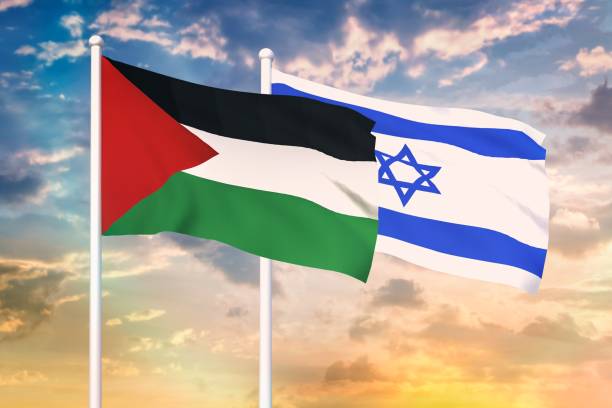
The key event is whether Israel and Hamas publicly confirm a mutual agreement for the ceasefire’s second phase, which would cover further Israeli withdrawal, Hamas disarmament and new Gaza governance arrangements. Reuters reported on 30 July that mediators were again pushing talks in Cairo and that the latest round had aimed at full implementation of the U.S.-brokered plan, while a separate Xinhua report on 31 July said a Hamas official and Egyptian state media had indicated agreement on a plan for phase two, pending a formal statement[8][7].
The 67% crowd-implied yes price sits above the prior pattern for this market, because phase-two breakthroughs have repeatedly been announced only to stall over sequencing, disarmament and troop withdrawal. The ceasefire has already seen months of limbo after phase one, with reporting from the BBC and CFR noting that second-phase talks were delayed, fighting and strikes continued, and the harder issues of governance and demilitarisation remained unresolved[6][4]. That history argues for treating headline moves as fragile until both sides issue explicit, public assent rather than mediator language or draft understandings[6][4].
Traders should watch for a formal statement from Hamas, an Israeli government or military confirmation, and any timetable emerging from Cairo or Washington, since this contract resolves only on an official mutual agreement. Bloomberg-style risk in crypto terms is likely to show up first in event-driven flows rather than broad market beta: if the headline lands, USDC-denominated contracts can reprice quickly on thin order books, with short-term volatility often feeding through to BTC and ETH sentiment via macro-risk positioning, while failure to formalise would leave the market anchored to negotiation headlines and funding-sensitive intraday swings. Reuters’ 30 July report and Xinhua’s 31 July update make the next official communications the main catalyst cluster[8][7].
Methodology
Methodologically this overview focuses on on-chain pricing: Polymarket's live mid comes from the Polygon conditional-token order book and settles automatically in USDC. The other three venues — Kalshi, Betfair, Manifold — sit alongside as off-chain reference points so you can see how the contract translates across regulatory and settlement regimes.
Resolution & payout
Settlement is on-chain via UMA Optimistic Oracle. A proposer posts the outcome with a bond, a two-hour dispute window opens, then the smart contract lifts winning conditional tokens to 1 USDC and sends payments to holders' wallets automatically. No withdrawal fees beyond Polygon gas.
Off-chain venues (Kalshi, Betfair, Smarkets) settle in local fiat through bank-side clearing — faster than SWIFT, slower than on-chain. Manifold pays no real cash.
FAQ
- What are crypto prediction markets?
- Crypto prediction markets are on-chain smart contracts where you buy YES or NO shares on a future crypto event (e.g. "BTC above $100k by year-end"). The market price between 0¢ and 100¢ is the implied probability.
- Why USDC and not ETH or USDT?
- USDC is the Polygon standard — audited reserves (Circle, monthly attestation), deepest order book, low gas costs. ETH volatility would distort probability quotes; USDT has thinner Polygon liquidity than USDC.
- What does a transaction cost on Polygon?
- Polygon gas is typically under $0.01 per transaction. A full trade cycle (Approve + Order + Fill) totals around $0.03 — compared to $5-50 on Ethereum mainnet.
- How volatile are crypto prediction markets?
- Crypto markets react to spot prices — a 5% BTC move typically shifts a "BTC above X by date" market 10-20%. Polymarket crypto market liquidity is usually six-figure USD, sufficient for active trading.
- Are crypto prediction markets taxable in the US?
- In the US, prediction market gains are typically treated as ordinary income or short-term capital gains depending on holding period. Consult a tax professional for your specific situation — we cannot provide tax advice.
%22%2F%3E%3Cpath%20d%3D%22M%206%2066%20A%2026%2026%200%200%201%2058%2066%22%20fill%3D%22%23E6B98D%22%20opacity%3D%220.9%22%2F%3E%3Ccircle%20cx%3D%2232%22%20cy%3D%2226%22%20r%3D%2222%22%20fill%3D%22%23F5CBA7%22%2F%3E%3Cpath%20d%3D%22M%2010%2026%20A%2022%2028%200%200%201%2054%2026%22%20fill%3D%22%23fbbf24%22%20opacity%3D%220.9%22%2F%3E%3C%2Fsvg%3E) and
and%22%2F%3E%3Cpath%20d%3D%22M%206%2066%20A%2026%2026%200%200%201%2058%2066%22%20fill%3D%22%23E6B98D%22%20opacity%3D%220.9%22%2F%3E%3Ccircle%20cx%3D%2232%22%20cy%3D%2226%22%20r%3D%2222%22%20fill%3D%22%23F5CBA7%22%2F%3E%3Cpath%20d%3D%22M%2010%2018%20Q%2016%204%2026%2010%20Q%2020%202%2032%206%20Q%2044%202%2038%2010%20Q%2048%204%2054%2018%22%20stroke%3D%22%23fbbf24%22%20stroke-width%3D%224%22%20fill%3D%22none%22%20stroke-linecap%3D%22round%22%2F%3E%3C%2Fsvg%3E)
Trade Israel x Hamas Ceasefire Phase II by 2026? on BTC Prediction
Live order book, 0% fees, USDC settlement in seconds.
Open live market →