Platform comparison
| Platform | YES odds | NO odds | Fee | KYC | Settlement | |
|---|---|---|---|---|---|---|
Polymarket (via BTC Prediction) Pick polygram.ink (preferred broker) |
24% | 76% | 0% (USDC on-chain) | No-KYC up to $1,500 | USDC, auto via UMA oracle | Open live market → |
Polymarket (direct) polymarket.com |
24% | 76% | 0% | Geo-blocked in US/UK/EU | USDC, on-chain | Open live market → |
Kalshi kalshi.com |
— | — | Up to 7% per trade | US-only, KYC required | USD | Open live market → |
Betfair Exchange betfair.com |
— | — | 2-5% commission | Full KYC from first trade | GBP / EUR | Open live market → |
Manifold Markets manifold.markets |
— | — | Play-money (mana) | None — play-money | Mana (no cash-out) | Open live market → |
Outcome probabilities
Current market-implied probability for each outcome, from the live order book.
| Outcome | Probability |
|---|---|
| December 31 | 24% |
| September 30 | 16% |
| August 31 | 8% |
| July 31 | 1% |
| May 31 | 0% |
| June 30 | 0% |
| June 15 | 0% |
| June 22 | 0% |
| March 31 | 0% |
| April 30 | 0% |
Market context
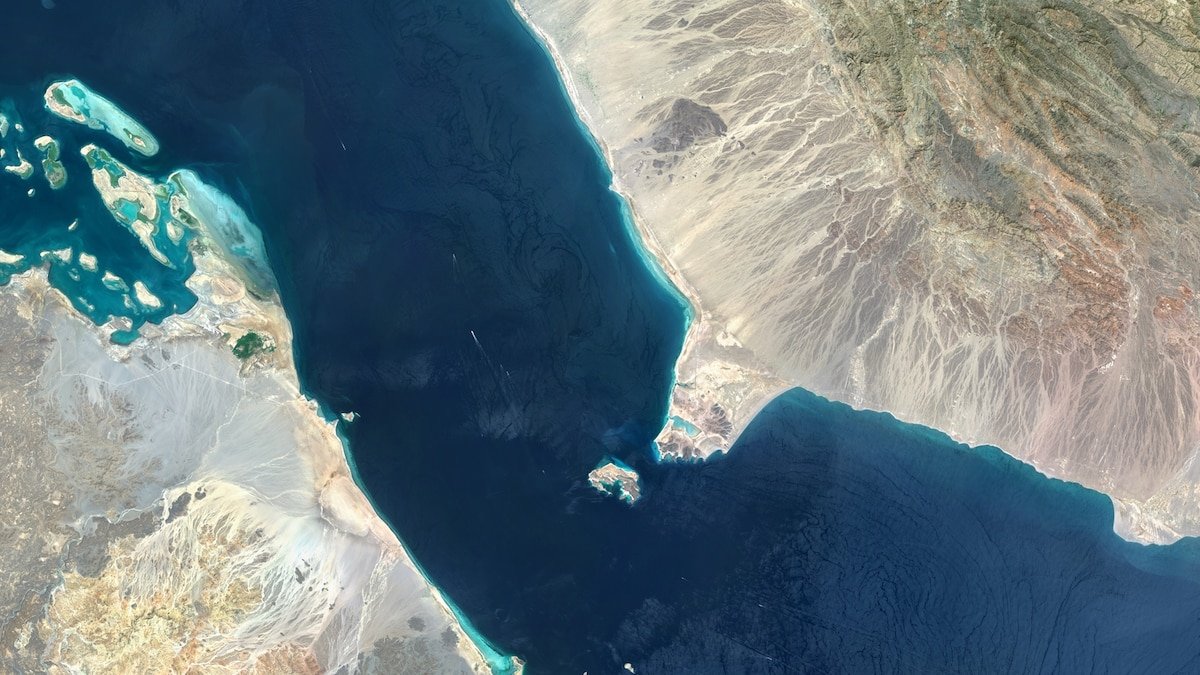
The real-world trigger is a severe drop in shipping through the Bab el-Mandeb Strait, where IMF PortWatch must publish a 7-day moving average of ship arrivals at **10 or below** for the market to pay out “Yes”. That is a very low bar, so the contract is not asking whether traffic is disrupted in a generic sense; it is asking for an extreme, data-visible contraction in transits on the PortWatch series. Reuters reported on 16 July that Iran had asked the Houthis to stand ready to close the Red Sea gateway if the US strikes Iranian power infrastructure, which keeps the tail risk of a sharp traffic collapse alive even if an actual closure has not yet materialised.[8]
The crowd’s 0% “Yes” implies traders still see the published transit series as far from the settlement threshold. That fits the broader historical pattern: Bab el-Mandeb has repeatedly faced threats and partial restrictions, but open-water traffic has usually continued rather than collapsing to near-zero. Al Jazeera and Eurasia Review both frame the strait as strategically important and note the high cost of a sustained shutdown, while Habtoor Research says shipping has continued to pass and that the Houthis have not imposed a full blockade.[1][2][3] For a prediction market keyed to an official 7-day average, those distinctions matter: rhetoric, warnings, or selective targeting are not enough unless they translate into an IMF data print at or below the contract level.
Traders should watch for Houthi or Iranian announcements, any US or Israeli strikes that could trigger escalation, and the cadence of IMF PortWatch updates, since the market resolves on publication rather than headlines. Euronews reported on 20 July that the Houthis threatened a Bab el-Mandeb closure in response to Saudi measures, showing how quickly rhetoric can flare without immediately producing a measurable traffic shutdown.[5] If risk assets reprice, the main spillover would likely run through Brent, tanker rates, and broader BTC/ETH sentiment via risk-off flows rather than through any direct on-chain mechanism; however, this market itself settles in USDC against the PortWatch publication, so the key variable remains the official ship-count data, not exchange funding or whale positioning.
Methodology
Methodologically this overview focuses on on-chain pricing: Polymarket's live mid comes from the Polygon conditional-token order book and settles automatically in USDC. The other three venues — Kalshi, Betfair, Manifold — sit alongside as off-chain reference points so you can see how the contract translates across regulatory and settlement regimes.
Resolution & payout
Settlement is on-chain via UMA Optimistic Oracle. A proposer posts the outcome with a bond, a two-hour dispute window opens, then the smart contract lifts winning conditional tokens to 1 USDC and sends payments to holders' wallets automatically. No withdrawal fees beyond Polygon gas.
Off-chain venues (Kalshi, Betfair, Smarkets) settle in local fiat through bank-side clearing — faster than SWIFT, slower than on-chain. Manifold pays no real cash.
FAQ
- What are crypto prediction markets?
- Crypto prediction markets are on-chain smart contracts where you buy YES or NO shares on a future crypto event (e.g. "BTC above $100k by year-end"). The market price between 0¢ and 100¢ is the implied probability.
- What does a transaction cost on Polygon?
- Polygon gas is typically under $0.01 per transaction. A full trade cycle (Approve + Order + Fill) totals around $0.03 — compared to $5-50 on Ethereum mainnet.
- How does UMA secure the resolution?
- The UMA Optimistic Oracle uses a bond system: a proposer posts a bond, a two-hour challenge window opens. On dispute the losing side forfeits the bond — financial incentive for honest resolution.
- How volatile are crypto prediction markets?
- Crypto markets react to spot prices — a 5% BTC move typically shifts a "BTC above X by date" market 10-20%. Polymarket crypto market liquidity is usually six-figure USD, sufficient for active trading.
- Which crypto markets exist on Polymarket?
- Currently active markets include BTC/ETH/SOL price targets, halving dates, ETF approvals, hard-fork outcomes and Layer-2 TVL thresholds. The list updates weekly; biggest volume sits on BTC and ETH price forecasts.
%22%2F%3E%3Cpath%20d%3D%22M%206%2066%20A%2026%2026%200%200%201%2058%2066%22%20fill%3D%22%23E6B98D%22%20opacity%3D%220.9%22%2F%3E%3Ccircle%20cx%3D%2232%22%20cy%3D%2226%22%20r%3D%2222%22%20fill%3D%22%23F5CBA7%22%2F%3E%3Cpath%20d%3D%22M%2010%2026%20A%2022%2028%200%200%201%2054%2026%22%20fill%3D%22%23fbbf24%22%20opacity%3D%220.9%22%2F%3E%3C%2Fsvg%3E) and
and%22%2F%3E%3Cpath%20d%3D%22M%206%2066%20A%2026%2026%200%200%201%2058%2066%22%20fill%3D%22%23E6B98D%22%20opacity%3D%220.9%22%2F%3E%3Ccircle%20cx%3D%2232%22%20cy%3D%2226%22%20r%3D%2222%22%20fill%3D%22%23F5CBA7%22%2F%3E%3Cpath%20d%3D%22M%2010%2018%20Q%2016%204%2026%2010%20Q%2020%202%2032%206%20Q%2044%202%2038%2010%20Q%2048%204%2054%2018%22%20stroke%3D%22%23fbbf24%22%20stroke-width%3D%224%22%20fill%3D%22none%22%20stroke-linecap%3D%22round%22%2F%3E%3C%2Fsvg%3E)
Trade Bab el-Mandeb Strait effectively closed by 2026? on BTC Prediction
Live order book, 0% fees, USDC settlement in seconds.
Open live market →