Platform comparison
| Platform | YES odds | NO odds | Fee | KYC | Settlement | |
|---|---|---|---|---|---|---|
Polymarket (via BTC Prediction) Pick polygram.ink (preferred broker) |
11% | 89% | 0% (USDC on-chain) | No-KYC up to $1,500 | USDC, auto via UMA oracle | Open live market → |
Polymarket (direct) polymarket.com |
11% | 89% | 0% | Geo-blocked in US/UK/EU | USDC, on-chain | Open live market → |
Kalshi kalshi.com |
— | — | Up to 7% per trade | US-only, KYC required | USD | Open live market → |
Betfair Exchange betfair.com |
— | — | 2-5% commission | Full KYC from first trade | GBP / EUR | Open live market → |
Manifold Markets manifold.markets |
— | — | Play-money (mana) | None — play-money | Mana (no cash-out) | Open live market → |
Outcome probabilities
Current market-implied probability for each outcome, from the live order book.
| Outcome | Probability |
|---|---|
| December 31 | 11% |
| November 30 | 6% |
| October 31 | 3% |
| June 30 | 0% |
| July 31 | 0% |
| August 13 | 0% |
| August 18 | 0% |
| August 31 | 0% |
| September 30 | 0% |
Market context
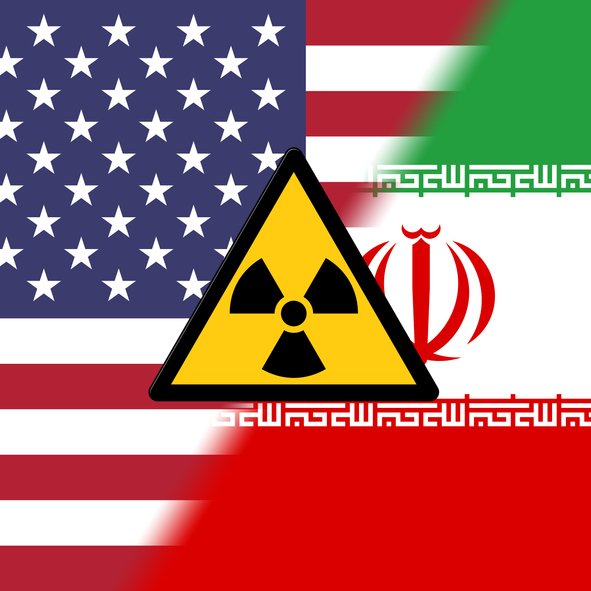
US-Iran Final Nuclear Deal by…?. The market is currently pricing the outcome at 0% YES, meaning crowd-implied probability sits at that level. Settlement is scheduled for 2027-01-01T04:59:00Z. Unlike a sportsbook, the price you see is set by buyers and sellers competing in a live order book — there is no house edge or bookmaker margin to fade.
World-affairs prediction markets price discrete geopolitical outcomes — ceasefires, treaty signings, leadership transitions — and tend to drift on rumour and snap-correct on official announcements.
Watch for the underlying catalysts that move this category: each official announcement, dataset release, or scheduled milestone generally produces a step change in the implied probability. Trades execute instantly on Polygon, and shares pay $1 each at resolution if your side wins.
Methodology
Methodologically this overview focuses on on-chain pricing: Polymarket's live mid comes from the Polygon conditional-token order book and settles automatically in USDC. The other three venues — Kalshi, Betfair, Manifold — sit alongside as off-chain reference points so you can see how the contract translates across regulatory and settlement regimes.
Resolution & payout
Settlement is on-chain via UMA Optimistic Oracle. A proposer posts the outcome with a bond, a two-hour dispute window opens, then the smart contract lifts winning conditional tokens to 1 USDC and sends payments to holders' wallets automatically. No withdrawal fees beyond Polygon gas.
Off-chain venues (Kalshi, Betfair, Smarkets) settle in local fiat through bank-side clearing — faster than SWIFT, slower than on-chain. Manifold pays no real cash.
UK Frequently Asked Questions
- What are crypto prediction markets?
- Crypto prediction markets are on-chain smart contracts where you buy YES or NO shares on a future crypto event (e.g. "BTC above $100k by year-end"). The market price between 0¢ and 100¢ is the implied probability.
- Why USDC and not ETH or USDT?
- USDC is the Polygon standard — audited reserves (Circle, monthly attestation), deepest order book, low gas costs. ETH volatility would distort probability quotes; USDT has thinner Polygon liquidity than USDC.
- Is Polymarket legal in the UK?
- Polymarket is accessible to UK traders but is not UKGC-licensed. It operates under US CFTC jurisdiction. UK residents face no domestic legal prohibition on using it, but UKGC consumer protections do not apply. For UKGC-regulated alternatives, Betfair Exchange and Smarkets offer similar prediction-style markets.
- Do I pay tax on prediction market profits in the UK?
- UKGC-licensed platform profits (Betfair, Smarkets) are typically tax-free gambling winnings for UK individuals. Polymarket profits involve USDC crypto transactions, which HMRC treats as Capital Gains Tax events. Keep full transaction records and report via Self Assessment if gains exceed £3,000 per tax year.
- How do I deposit on Polymarket from the UK?
- UK traders typically fund Polymarket via Coinbase UK, Kraken or Revolut — buying USDC with GBP and transferring to a Polygon-compatible wallet (MetaMask, Coinbase Wallet). Polymarket's onboarding walks you through the bridging process. Typical GBP-to-USDC conversion costs 0.5–1%.
%22%2F%3E%3Cpath%20d%3D%22M%206%2066%20A%2026%2026%200%200%201%2058%2066%22%20fill%3D%22%23E6B98D%22%20opacity%3D%220.9%22%2F%3E%3Ccircle%20cx%3D%2232%22%20cy%3D%2226%22%20r%3D%2222%22%20fill%3D%22%23F5CBA7%22%2F%3E%3Cpath%20d%3D%22M%2010%2026%20A%2022%2028%200%200%201%2054%2026%22%20fill%3D%22%23fbbf24%22%20opacity%3D%220.9%22%2F%3E%3C%2Fsvg%3E) and
and%22%2F%3E%3Cpath%20d%3D%22M%206%2066%20A%2026%2026%200%200%201%2058%2066%22%20fill%3D%22%23E6B98D%22%20opacity%3D%220.9%22%2F%3E%3Ccircle%20cx%3D%2232%22%20cy%3D%2226%22%20r%3D%2222%22%20fill%3D%22%23F5CBA7%22%2F%3E%3Cpath%20d%3D%22M%2010%2018%20Q%2016%204%2026%2010%20Q%2020%202%2032%206%20Q%2044%202%2038%2010%20Q%2048%204%2054%2018%22%20stroke%3D%22%23fbbf24%22%20stroke-width%3D%224%22%20fill%3D%22none%22%20stroke-linecap%3D%22round%22%2F%3E%3C%2Fsvg%3E)
Trade US-Iran Final Nuclear Deal by…? on BTC Prediction
Live order book, 0% fees, USDC settlement in seconds.
Open live market →