Platform comparison
| Platform | YES odds | NO odds | Fee | KYC | Settlement | |
|---|---|---|---|---|---|---|
Polymarket (via BTC Prediction) Pick polygram.ink (preferred broker) |
2% | 98% | 0% (USDC on-chain) | No-KYC up to $1,500 | USDC, auto via UMA oracle | Open live market → |
Polymarket (direct) polymarket.com |
2% | 98% | 0% | Geo-blocked in US/UK/EU | USDC, on-chain | Open live market → |
Kalshi kalshi.com |
— | — | Up to 7% per trade | US-only, KYC required | USD | Open live market → |
Betfair Exchange betfair.com |
— | — | 2-5% commission | Full KYC from first trade | GBP / EUR | Open live market → |
Manifold Markets manifold.markets |
— | — | Play-money (mana) | None — play-money | Mana (no cash-out) | Open live market → |
Market context
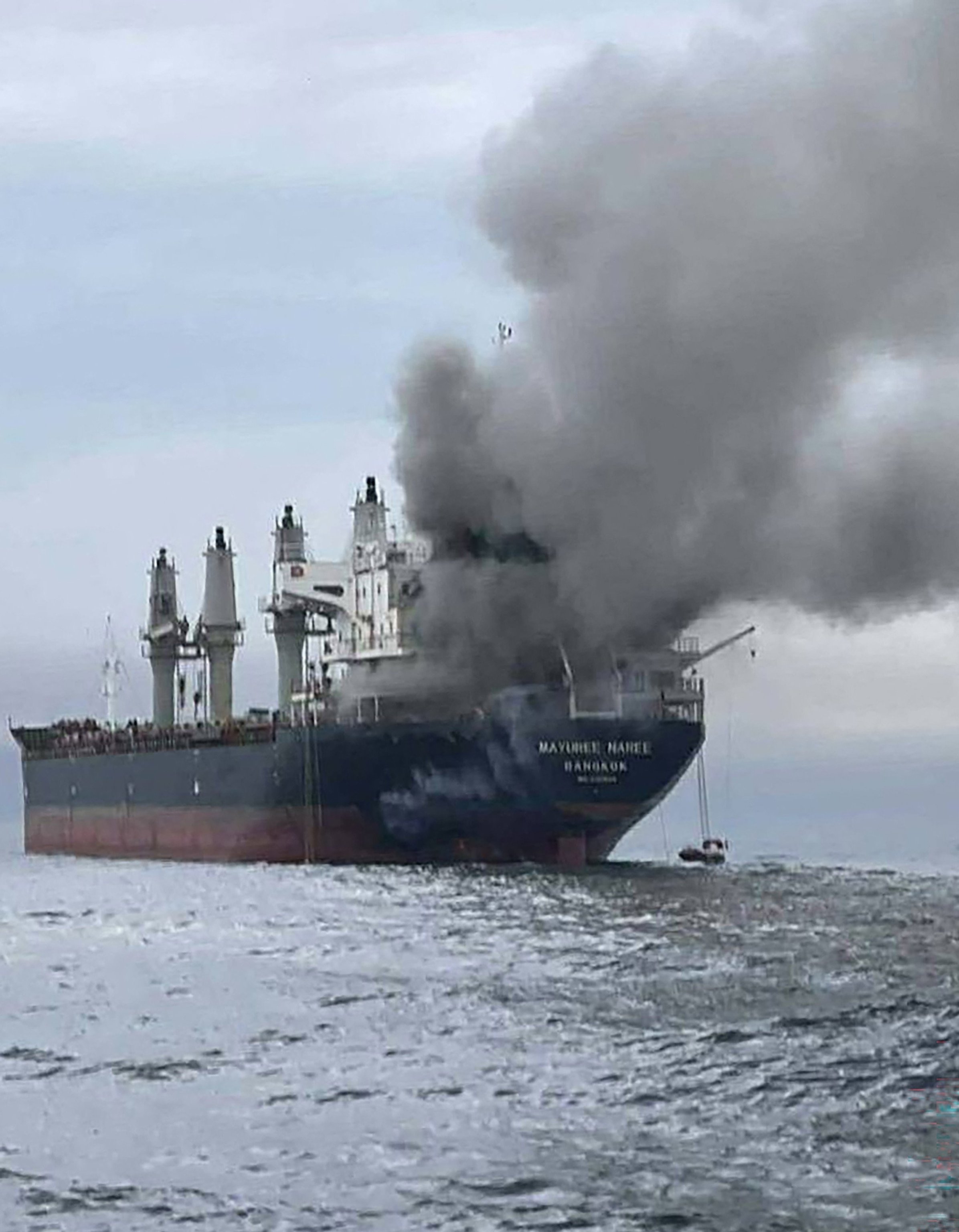
Iran recently struck a vessel in the Strait of Hormuz, disrupting escort operations and confirming Tehran’s willingness to use the waterway as leverage against perceived aggressors[1]. This action contradicts earlier diplomatic assurances from Oman that Iran had affirmed commitment to toll-free safe passage, illustrating the volatility of such pledges in the region[1]. Historical precedents show that Iranian declarations on Hormuz often shift rapidly based on military pressure or negotiation dynamics, with the US explicitly demanding a public guarantee of non-attack as a prerequisite for talks in Oman[4][9]. The current 2% crowd-implied probability reflects this deep scepticism, as past commitments have frequently collapsed when geopolitical tensions escalated.
Traders must monitor the outcome of negotiations led by US Vice President JD Vance in Oman, where a public Iranian pledge is the primary sticking point[4]. A qualifying announcement requires a declarative statement from the Iranian government or an authorized representative explicitly committing not to attack ships transiting the strait, rather than vague assurances of safe passage for non-hostile vessels[2]. Recent US insistence that Iran stop firing on commercial ships highlights the high bar for settlement, while any failure to secure this promise will likely see the market resolve to No[9]. Watch for official statements from Tehran’s parliamentary leadership or foreign ministry, as unofficial media reports will not trigger a Yes resolution.
The contract settles in USDC on-chain, tying its outcome to broader BTC and ETH macro flows if geopolitical risk spikes. Whale activity in exchange spot markets may surge if the probability shifts, as funding rates often react to sudden geopolitical catalysts. Monitor crypto data sources for unusual volume spikes in prediction market liquidity, which could signal institutional positioning ahead of the settlement window ending 2026-07-12.
Methodology
Methodologically this overview focuses on on-chain pricing: Polymarket's live mid comes from the Polygon conditional-token order book and settles automatically in USDC. The other three venues — Kalshi, Betfair, Manifold — sit alongside as off-chain reference points so you can see how the contract translates across regulatory and settlement regimes.
Resolution & payout
Settlement is on-chain via UMA Optimistic Oracle. A proposer posts the outcome with a bond, a two-hour dispute window opens, then the smart contract lifts winning conditional tokens to 1 USDC and sends payments to holders' wallets automatically. No withdrawal fees beyond Polygon gas.
Off-chain venues (Kalshi, Betfair, Smarkets) settle in local fiat through bank-side clearing — faster than SWIFT, slower than on-chain. Manifold pays no real cash.
FAQ
- Why USDC and not ETH or USDT?
- USDC is the Polygon standard — audited reserves (Circle, monthly attestation), deepest order book, low gas costs. ETH volatility would distort probability quotes; USDT has thinner Polygon liquidity than USDC.
- What does a transaction cost on Polygon?
- Polygon gas is typically under $0.01 per transaction. A full trade cycle (Approve + Order + Fill) totals around $0.03 — compared to $5-50 on Ethereum mainnet.
- How does UMA secure the resolution?
- The UMA Optimistic Oracle uses a bond system: a proposer posts a bond, a two-hour challenge window opens. On dispute the losing side forfeits the bond — financial incentive for honest resolution.
- How volatile are crypto prediction markets?
- Crypto markets react to spot prices — a 5% BTC move typically shifts a "BTC above X by date" market 10-20%. Polymarket crypto market liquidity is usually six-figure USD, sufficient for active trading.
- Are crypto prediction markets taxable in the US?
- In the US, prediction market gains are typically treated as ordinary income or short-term capital gains depending on holding period. Consult a tax professional for your specific situation — we cannot provide tax advice.
%22%2F%3E%3Cpath%20d%3D%22M%206%2066%20A%2026%2026%200%200%201%2058%2066%22%20fill%3D%22%23E6B98D%22%20opacity%3D%220.9%22%2F%3E%3Ccircle%20cx%3D%2232%22%20cy%3D%2226%22%20r%3D%2222%22%20fill%3D%22%23F5CBA7%22%2F%3E%3Cpath%20d%3D%22M%2010%2026%20A%2022%2028%200%200%201%2054%2026%22%20fill%3D%22%23fbbf24%22%20opacity%3D%220.9%22%2F%3E%3C%2Fsvg%3E) and
and%22%2F%3E%3Cpath%20d%3D%22M%206%2066%20A%2026%2026%200%200%201%2058%2066%22%20fill%3D%22%23E6B98D%22%20opacity%3D%220.9%22%2F%3E%3Ccircle%20cx%3D%2232%22%20cy%3D%2226%22%20r%3D%2222%22%20fill%3D%22%23F5CBA7%22%2F%3E%3Cpath%20d%3D%22M%2010%2018%20Q%2016%204%2026%2010%20Q%2020%202%2032%206%20Q%2044%202%2038%2010%20Q%2048%204%2054%2018%22%20stroke%3D%22%23fbbf24%22%20stroke-width%3D%224%22%20fill%3D%22none%22%20stroke-linecap%3D%22round%22%2F%3E%3C%2Fsvg%3E)
Trade Iran commits not to attack ships in Hormuz by Sunday? on BTC Prediction
Live order book, 0% fees, USDC settlement in seconds.
Open live market →