Platform comparison
| Platform | YES odds | NO odds | Fee | KYC | Settlement | |
|---|---|---|---|---|---|---|
BTC Prediction Pick polygram.ink |
0% | 100% | 0% (USDC on-chain) | No-KYC up to $1,500 | USDC, auto via UMA oracle | Open on BTC Prediction → |
Polymarket polymarket.com |
0% | 100% | 0% | Geo-blocked in US/UK/EU | USDC, on-chain | Open on BTC Prediction → |
Kalshi kalshi.com |
— | — | Up to 7% per trade | US-only, KYC required | USD | Open on BTC Prediction → |
Betfair Exchange betfair.com |
— | — | 2-5% commission | Full KYC from first trade | GBP / EUR | Open on BTC Prediction → |
Manifold Markets manifold.markets |
— | — | Play-money (mana) | None — play-money | Mana (no cash-out) | Open on BTC Prediction → |
Live odds for Polymarket-based markets come from the Polygon order book. Non-Polymarket venues show attributes only; clicking any row opens the market on BTC Prediction.
Active sub-markets
Market context
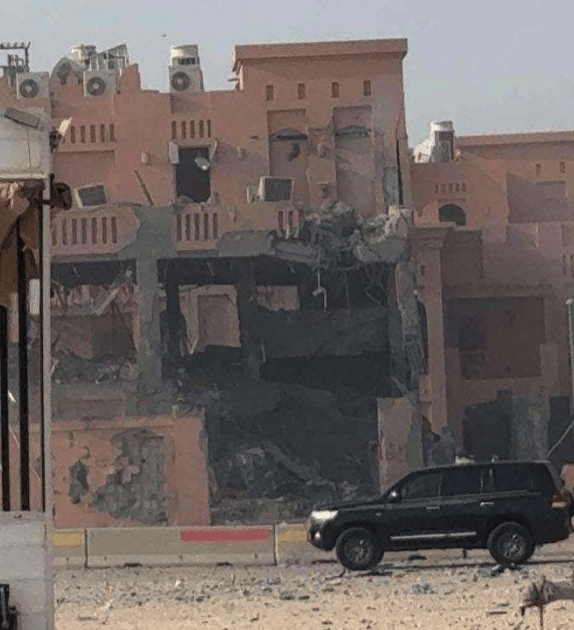
Israel’s military has already initiated aerial strikes against Iran in early 2026, marking the start of a broader conflict that could expand across the Gulf. The current crowd-implied probability of 0% for Israel striking in any additional country by 2026 appears inconsistent with recent on-chain data from Polymarket, where the frontrunner outcome is four countries at 49% probability[1]. This divergence suggests traders are underweighting the likelihood of escalation, especially given that USDC settlement on prediction platforms often reacts swiftly to geopolitical shocks, mirroring BTC/ETH funding rate spikes during crisis events.
Historically, Israel’s 2024–2025 operations in Lebanon, Syria, and Gaza involved strikes across multiple sovereign territories, though Gaza and the West Bank are excluded from this market. The 2026 Iran war, which began with US-Israeli strikes on 28 February, has already drawn in regional actors like Hezbollah, with Iran reportedly targeting Kuwait, Bahrain, Saudi Arabia, and the UAE[3]. If Israel retaliates beyond Iran, these Gulf states could become new strike targets, aligning with the market’s four-country consensus.
Traders should monitor upcoming US-Israeli diplomatic announcements, particularly any plans for renewed strikes on Iran, as Reuters reported a temporary ceasefire declared on 8 June following Trump’s intervention[2]. Funding rates on crypto exchanges and whale flows into ETH-linked prediction contracts may signal early positioning before official announcements. Any breakdown in the ceasefire or escalation involving Hezbollah could trigger rapid price adjustments in on-chain markets, especially as settlement approaches 31 December 2026.
Methodology
Methodologically this overview focuses on on-chain pricing: Polymarket's live mid comes from the Polygon conditional-token order book and settles automatically in USDC. The other three venues — Kalshi, Betfair, Manifold — are listed with their platform attributes, because they operate off-chain and a 1:1 comparison of contract mechanics isn't possible.
Resolution & payout
Settlement is on-chain via UMA Optimistic Oracle. A proposer posts the outcome with a bond, a two-hour dispute window opens, then the smart contract lifts winning conditional tokens to 1 USDC and sends payments to holders' wallets automatically. No withdrawal fees beyond Polygon gas.
Off-chain venues (Kalshi, Betfair, Smarkets) settle in local fiat through bank-side clearing — faster than SWIFT, slower than on-chain. Manifold pays no real cash.
FAQ
- How does resolution work?
- Through the UMA Optimistic Oracle on Polygon: a proposer submits the outcome, a two-hour challenge window opens, and USDC payouts settle automatically once the result is final.
- What's the difference between YES and NO shares?
- A YES share pays $1.00 if the event happens, $0 otherwise. A NO share pays $1.00 if the event doesn't happen. The market price between 0¢ and 100¢ is the implied probability.
- What does it cost to trade on BTC Prediction?
- Zero. BTC Prediction routes every order to the live Polymarket order book; the only cost is the Polygon network fee, typically under $0.01 per transaction.
- Do I need to KYC for this market?
- Not under $1,500 of lifetime trading volume. Above that threshold, BTC Prediction triggers a quick verification flow that finishes in minutes.
- How reliable are the quoted odds?
- The YES/NO percentages are the live mid-prices of the Polymarket order book. On deep markets they move every few seconds; on thinner ones you'll see short plateaus.
%22%2F%3E%3Cpath%20d%3D%22M%206%2066%20A%2026%2026%200%200%201%2058%2066%22%20fill%3D%22%23E6B98D%22%20opacity%3D%220.9%22%2F%3E%3Ccircle%20cx%3D%2232%22%20cy%3D%2226%22%20r%3D%2222%22%20fill%3D%22%23F5CBA7%22%2F%3E%3Cpath%20d%3D%22M%2010%2026%20A%2022%2028%200%200%201%2054%2026%22%20fill%3D%22%23fbbf24%22%20opacity%3D%220.9%22%2F%3E%3C%2Fsvg%3E) and
and%22%2F%3E%3Cpath%20d%3D%22M%206%2066%20A%2026%2026%200%200%201%2058%2066%22%20fill%3D%22%23E6B98D%22%20opacity%3D%220.9%22%2F%3E%3Ccircle%20cx%3D%2232%22%20cy%3D%2226%22%20r%3D%2222%22%20fill%3D%22%23F5CBA7%22%2F%3E%3Cpath%20d%3D%22M%2010%2018%20Q%2016%204%2026%2010%20Q%2020%202%2032%206%20Q%2044%202%2038%2010%20Q%2048%204%2054%2018%22%20stroke%3D%22%23fbbf24%22%20stroke-width%3D%224%22%20fill%3D%22none%22%20stroke-linecap%3D%22round%22%2F%3E%3C%2Fsvg%3E)
Trade How many different countries will Israel strike in 2… on BTC Prediction
Live order book, 0% fees, USDC settlement in seconds.
Trade on BTC Prediction →