Platform comparison
| Platform | YES odds | NO odds | Fee | KYC | Settlement | |
|---|---|---|---|---|---|---|
Polymarket (via BTC Prediction) Pick polygram.ink (preferred broker) |
50% | 50% | 0% (USDC on-chain) | No-KYC up to $1,500 | USDC, auto via UMA oracle | Open live market → |
Polymarket (direct) polymarket.com |
50% | 50% | 0% | Geo-blocked in US/UK/EU | USDC, on-chain | Open live market → |
Kalshi kalshi.com |
— | — | Up to 7% per trade | US-only, KYC required | USD | Open live market → |
Betfair Exchange betfair.com |
— | — | 2-5% commission | Full KYC from first trade | GBP / EUR | Open live market → |
Manifold Markets manifold.markets |
— | — | Play-money (mana) | None — play-money | Mana (no cash-out) | Open live market → |
Outcome probabilities
Current market-implied probability for each outcome, from the live order book.
| Outcome | Probability |
|---|---|
| A | 50% |
| B | 50% |
| C | 50% |
| Other | 50% |
| TEAM VISION | 25% |
| Team Yandex | 18% |
| BoomBoys | 13% |
| Team Falcons | 11% |
| Team Spirit | 11% |
| Aurora Gaming | 8% |
| Team Liquid | 7% |
| 1w Team | 6% |
| Xtreme Gaming | 3% |
| Nigma Galaxy | 2% |
| Vici Gaming | 2% |
| LGD Gaming | 2% |
| HULIGANI | 1% |
| Team Resilience | 1% |
| OG | 1% |
| GamerLegion | 1% |
Market context
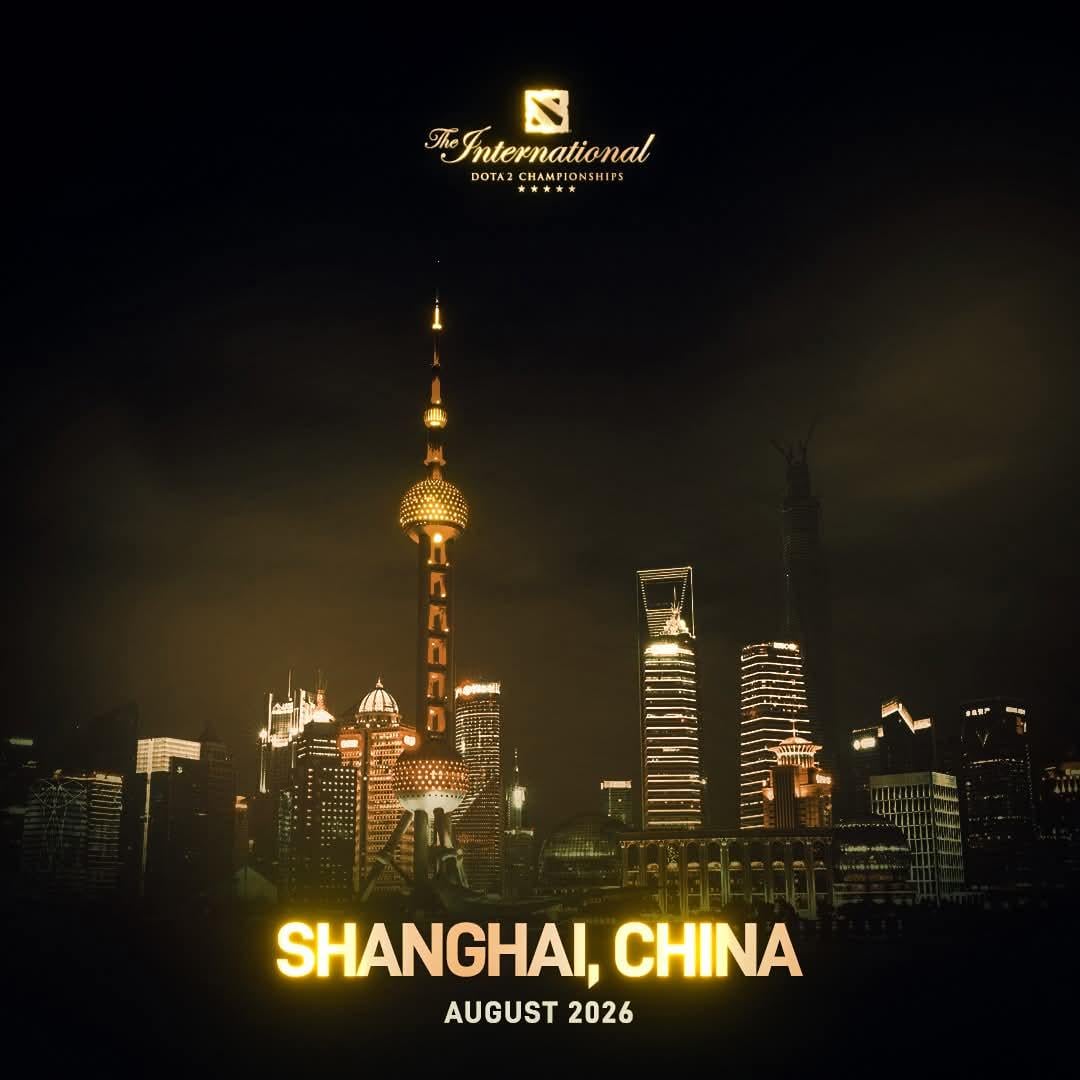
The International 2026 is the Dota 2 world championship, and this market settles on the team officially recorded as finishing first, with any unresolved result by 6 September falling to Other. The current 8% crowd-implied price sits well below the leading contenders, implying the market is treating the field as highly fragmented rather than assigning a dominant outright favourite.[1]
That reading is consistent with recent external modelling and early market snapshots, which have put names such as Team Yandex, PARIVISION, Aurora Gaming and Team Falcons in the strongest tier rather than backing a single clear frontrunner.[2][4] Comparable TI outrights have usually concentrated around a small group of established teams, but the presence of several closely rated candidates means a mid-single-digit or low-teens market share can persist for teams outside the top line, especially once bracket variance and patch adaptation enter the picture.[5][11] In on-chain terms, this kind of market often behaves like a long-dated event contract: price can stay pinned in a narrow band until line-ups, seeding and elimination paths become clearer, while settlement remains a simple USDC binary outcome.
The main catalysts are the tournament roster list, the official schedule and bracket, and any late-breaking roster or substitute news that changes qualification strength. Valve’s TI coverage and supporter-bundle ecosystem are typically the baseline reference points for format and event timing, while third-party tournament pages and odds boards can show how expectations shift as the event approaches.[8][15][17] For crypto-focused traders, broader market conditions can matter only at the margin here, but risk appetite in BTC and ETH, plus any liquidity rotation into USDC-heavy positions, can affect how aggressively smaller probabilities get traded rather than the underlying esports outcome itself.
Methodology
This page reads The International 2026: Winner on-chain. Polymarket's quote comes directly from the Polygon order book — the only comparable venue with on-chain settlement. Kalshi (USD, off-chain), Betfair (GBP/EUR, off-chain) and Manifold (play-money) are listed alongside for venue context. Every CTA routes to BTC Prediction, which mirrors the Polymarket order book directly.
Resolution & payout
Settlement is on-chain via UMA Optimistic Oracle. A proposer posts the outcome with a bond, a two-hour dispute window opens, then the smart contract lifts winning conditional tokens to 1 USDC and sends payments to holders' wallets automatically. No withdrawal fees beyond Polygon gas.
Off-chain venues (Kalshi, Betfair, Smarkets) settle in local fiat through bank-side clearing — faster than SWIFT, slower than on-chain. Manifold pays no real cash.
UK Frequently Asked Questions
- Why USDC and not ETH or USDT?
- USDC is the Polygon standard — audited reserves (Circle, monthly attestation), deepest order book, low gas costs. ETH volatility would distort probability quotes; USDT has thinner Polygon liquidity than USDC.
- What does a transaction cost on Polygon?
- Polygon gas is typically under $0.01 per transaction. A full trade cycle (Approve + Order + Fill) totals around $0.03 — compared to $5-50 on Ethereum mainnet.
- Is Polymarket legal in the UK?
- Polymarket is accessible to UK traders but is not UKGC-licensed. It operates under US CFTC jurisdiction. UK residents face no domestic legal prohibition on using it, but UKGC consumer protections do not apply. For UKGC-regulated alternatives, Betfair Exchange and Smarkets offer similar prediction-style markets.
- Do I pay tax on prediction market profits in the UK?
- UKGC-licensed platform profits (Betfair, Smarkets) are typically tax-free gambling winnings for UK individuals. Polymarket profits involve USDC crypto transactions, which HMRC treats as Capital Gains Tax events. Keep full transaction records and report via Self Assessment if gains exceed £3,000 per tax year.
- How do I deposit on Polymarket from the UK?
- UK traders typically fund Polymarket via Coinbase UK, Kraken or Revolut — buying USDC with GBP and transferring to a Polygon-compatible wallet (MetaMask, Coinbase Wallet). Polymarket's onboarding walks you through the bridging process. Typical GBP-to-USDC conversion costs 0.5–1%.
%22%2F%3E%3Cpath%20d%3D%22M%206%2066%20A%2026%2026%200%200%201%2058%2066%22%20fill%3D%22%23E6B98D%22%20opacity%3D%220.9%22%2F%3E%3Ccircle%20cx%3D%2232%22%20cy%3D%2226%22%20r%3D%2222%22%20fill%3D%22%23F5CBA7%22%2F%3E%3Cpath%20d%3D%22M%2010%2026%20A%2022%2028%200%200%201%2054%2026%22%20fill%3D%22%23fbbf24%22%20opacity%3D%220.9%22%2F%3E%3C%2Fsvg%3E) and
and%22%2F%3E%3Cpath%20d%3D%22M%206%2066%20A%2026%2026%200%200%201%2058%2066%22%20fill%3D%22%23E6B98D%22%20opacity%3D%220.9%22%2F%3E%3Ccircle%20cx%3D%2232%22%20cy%3D%2226%22%20r%3D%2222%22%20fill%3D%22%23F5CBA7%22%2F%3E%3Cpath%20d%3D%22M%2010%2018%20Q%2016%204%2026%2010%20Q%2020%202%2032%206%20Q%2044%202%2038%2010%20Q%2048%204%2054%2018%22%20stroke%3D%22%23fbbf24%22%20stroke-width%3D%224%22%20fill%3D%22none%22%20stroke-linecap%3D%22round%22%2F%3E%3C%2Fsvg%3E)
Trade The International 2026: Winner on BTC Prediction
Live order book, 0% fees, USDC settlement in seconds.
Open live market →